Sandy Cove, Kinmel Bay, North Wales.
Sandy Cove is located in Kinmel Bay a small seaside town in Conwy County Borough, north Wales. It is also an electoral ward to the county council and town council. The resort town of Rhyl lies just across the River Clwyd in the neighbouring county of Denbighshire.
According to the 2001 Census, together with neighbouring Towyn (to the west), it had a population of 7,864, of which 10.7% could speak Welsh.
Kinmel Bay is part of a large urban area which includes Abergele, Bodelwyddan, Pensarn, Towyn, Rhyl and Prestatyn, These are also tourist areas for spring/summer self-catering holidaymakers which include various caravan sites.
Towyn and Kinmel Bay sit side‑by‑side on the North Wales coast, offering long sandy beaches and classic seaside fun. Popular with families, both resorts combine traditional amusements with easy access to watersports, attractions and wide open coastal views. Kinmel Bay’s broad sandy beach is ideal for paddling, swimming and long walks.
Kinmel Bay was originally called Foryd before it grew in size, and that was the name of the former train station (see Foryd railway station).Sandy Cove beach is popular with tourists and the local population. In addition to various small shops and takeaway outlets, there is also an Asda superstore that opened in 1981, and (as of 2016) includes a large petrol filling station.
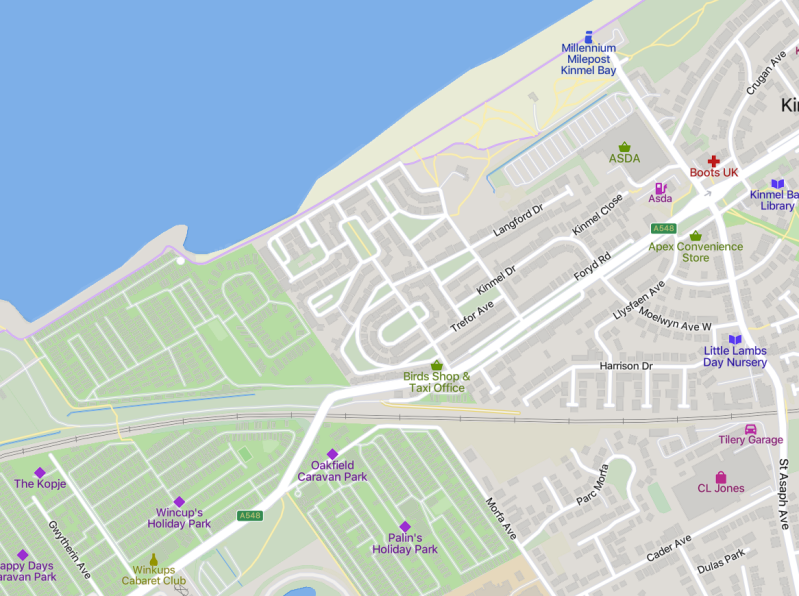
Map of Sandy Cove, Kinmel Bay.
Kinmel Dunes Local Nature Reserve
Come and explore a fascinating natural sand dune system with onsite facilities, a short circular walk and beautiful sandy beach!
Why visit?
Wheelchair friendly
Onsite facilities
Unique wildlife
Kinmel Dunes is one of our protected Local Nature Reserves (LNR). It was once part of a much larger coastline sand dune system, but now forms a thin strip between Towyn and Rhyl. The dunes are a valuable habitat for a wealth of plants and animals.
The best time to spot flowers and wildlife here is May to August.
The rolling dunes also shelter an expansive sandy beach within Kinmel Bay - meaning you can finish your nature walk through the dunes with some shell hunting and sandcastle building.
The Dunes Trail is a 1 mile long circular walk that allows you to explore the whole site safely and without disturbing the wildlife. The Dunes Trail also includes a small section of the North Wales Coastal Path.
What wildlife will you discover?
Whether low to the ground amongst the bare sand or further back in amongst the taller grasses, here’s a few flowers that add a splash of colour to look out for:
Meadow buttercup
Wild carrot
Common cat’s-ear
Hare’s-foot clover
Lucerne
Fluttering amongst the flowers, from April to September you’ll spot these butterflies and more:
Small white
Green-veined white
Orange tip
Meadow brown
If you sit quietly on a patch of south-facing bare sand around midday, you may spot a common lizard.
The resident kestrel is often seen at the eastern end of the dunes hunting for a common vole or shrew.
You may be lucky enough to hear the beautiful sound of a skylark. It’s vulnerable between May and August as it nests on the ground, which can easily be destroyed accidentally by dogs and people. Skylark numbers are declining massively due to habitat loss - being designated a Local Nature Reserve safeguards the dunes against development.